
About me
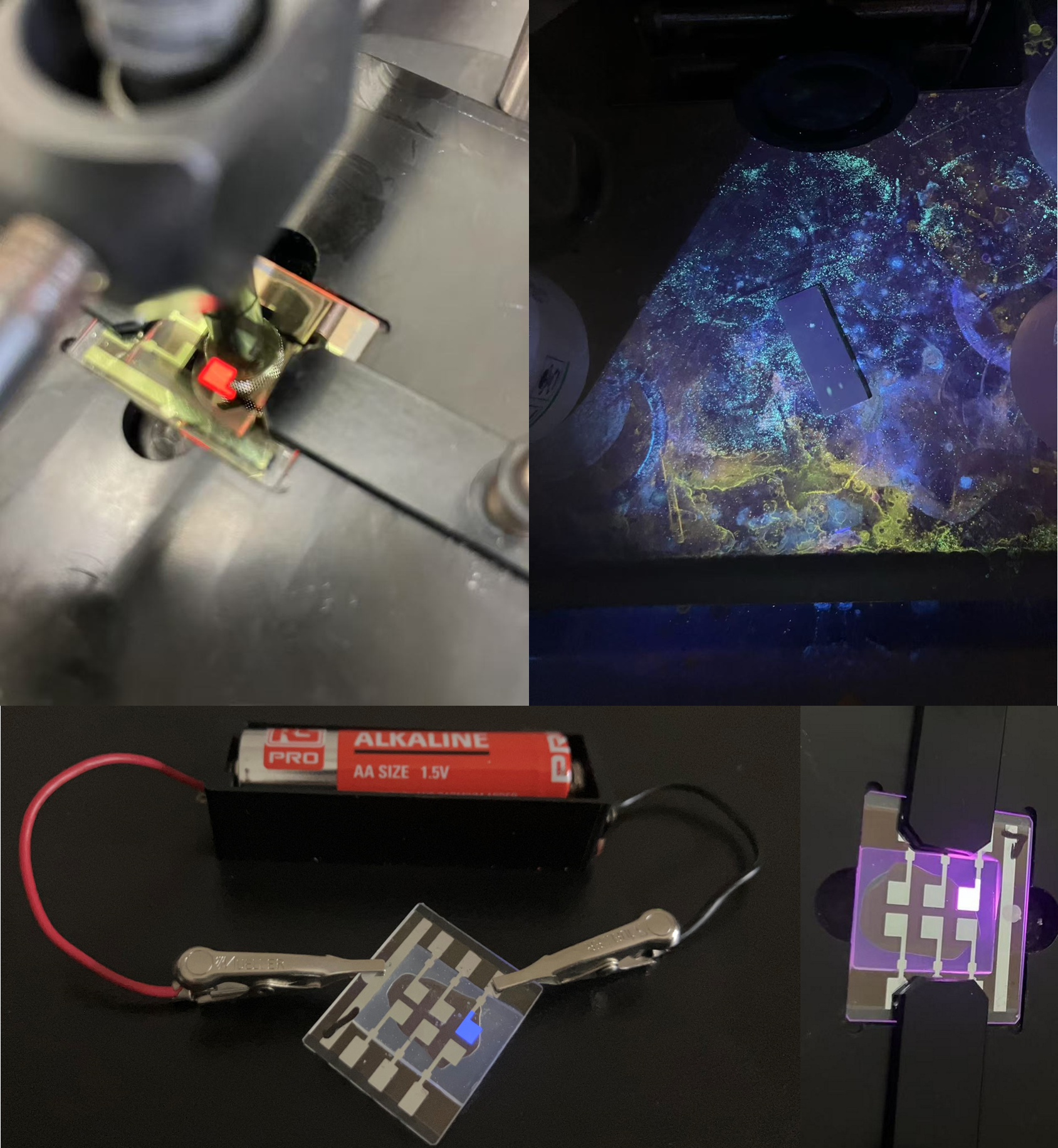
I am currently a Ph.D. student at Tokyo Institute of Technology, where my supervisor Prof. Seiichiro IZAWA and I are focusing on research related to triplet-triplet annihilation upconversion OLEDs.
My story
I am SHUI QING-JUN (水 清军), a PhD candidate from Tokyo Institute of Technology. I spent my formative years in Dingxi (定西), a small town in Northwest China. During high school, I encountered organic chemistry and developed a profound interest in it, leading me to self-study the entire undergraduate curriculum in organic chemistry. At the time, I had no idea how significantly this small interest would impact my life.
Later, I was admitted to Zhejiang University and chose the Department of Polymer Science and Engineering. In my sophomore year, I began engaging in research activities in the lab. During my first year of research, I focused on topics related to polymers and fluids. However, I quickly realized that I was not passionate about this area, despite the kindness and warmth of my senior peers and supervisor. This realization led me to explore the broader scientific world and understand what kinds of research scientists were undertaking.
Eventually, I discovered my interest in photoelectric functional molecules and their applications in semiconductors. In my junior year, I came across the unique research of Prof. Seiichiro IZAWA on the mechanisms of organic solar cells, which greatly intrigued me. I reached out to him and secured a position in his research group for my Ph.D. studies after completing my undergraduate degree.
In my senior year, when it was time to choose a lab for my graduation thesis, I opted for a topic related to functional molecules, although it was not directly related to organic solar cells. I believed that learning about interdisciplinary subjects and acquiring diverse skills would benefit my future. I was fortunate to meet Prof. Ning Huang, a wise, steady, and hardworking principal investigator. Under his guidance, I started working on projects related to covalent organic frameworks (COFs) and began learning organic synthesis, particularly the synthesis of porphyrins. This period marked the most enjoyable, fulfilling, and meaningful time of my undergraduate years.
During my last year of undergraduate study, unfortunately, human-kinds encountered the COVID-19 pandemic, which delayed my journey to Japan for a year and a half. After this period of waiting at home, I finally arrived in Japan to start my master and doctoral studies. From April 2022 to March 2023, Prof. Izawa entrusted me to conduct research under the guidance of Prof. Matsuo Yutaka and Prof. Lin Hao-sheng at Nagoya University, focusing on fullerene synthesis and perovskite solar cells. During this year, Prof. Lin provided me with patient guidance. His enthusiasm, wisdom, and optimism deeply influenced me and helped me through the toughest times. Ultimately, through the collaboration between Nagoya University (my master’s alma mater), Zhejiang University (my bachelor’s alma mater), and Tokyo Institute of Technology (my doctoral alma mater), we published our research findings in JACS titled “Evaporable Fullerene Indanones with Controlled Amorphous Morphology as Electron Transport Layers for Inverted Perovskite Solar Cells“.
I later officially joined Prof. Izawa’s lab as doctoral student. Now in my second year of doctoral studies, I am very happy and have been involved in many interesting projects.
To be continued…